
Can an AI Resume Checker Grade Your Cover Letter? Yes — Here’s How
An AI resume checker doesn’t stop at your resume — the best tools score your cover letter too, checking it for ATS readability, job-description keywords, tone, and rookie mistakes before a recruiter ever sees it. The short answer: yes, AI can grade a cover letter, and it will hand you a score along with specific line edits.

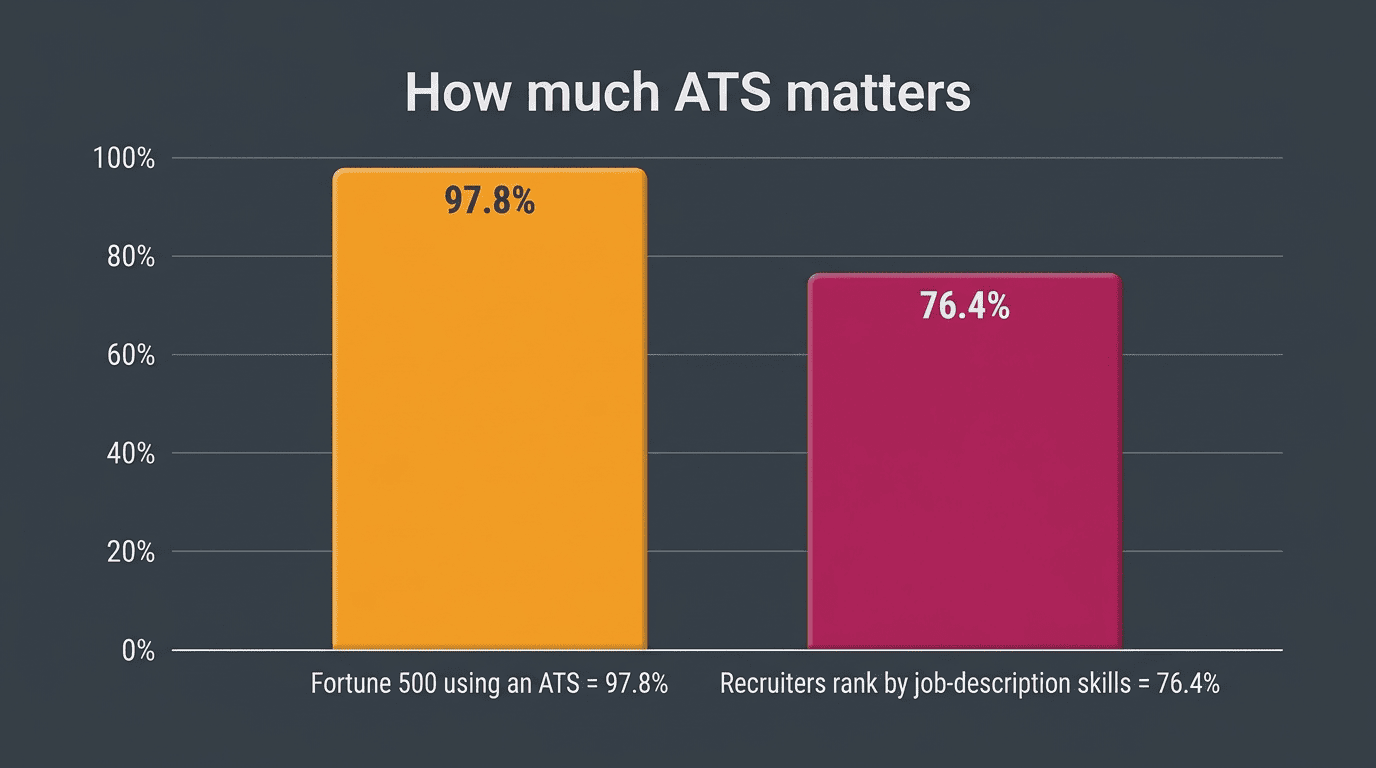
That matters more than it used to. According to Jobscan’s 2025 ATS Usage Report, 97.8% of Fortune 500 companies now run a detectable applicant tracking system, and with 7.6 million job openings still on the books as of May 2026 per the Bureau of Labor Statistics, a cover letter that’s actually matched to the job description is one of the few levers you fully control. Worth saying plainly: a checker can sharpen your writing and your odds of clearing that first filter, but it can’t promise you a job offer.
What an AI Resume Checker Does for a Cover Letter
Cover letter review used to be an afterthought bolted onto resume tools, if it existed at all. That’s changed — a checker now treats the letter as a document worth scoring in its own right, not a footnote to the resume.
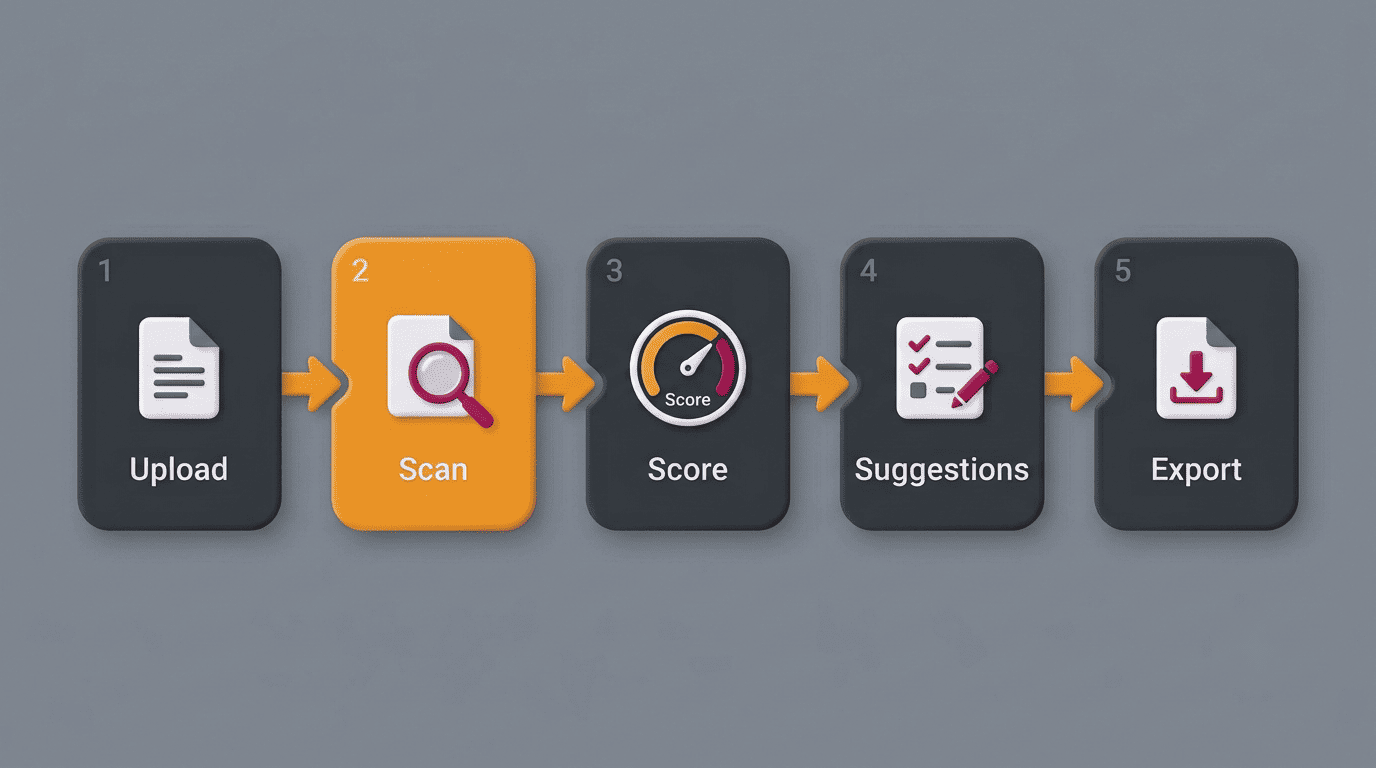
From resume-only to full-application review
A traditional «resume checker» looked only at the resume. A modern AI resume review tool goes further and parses the cover letter too: it scans the document, produces a live score, flags strengths and weak spots, and suggests edits. The workflow is usually short — five steps, start to finish:
- Upload your cover letter as a PDF or DOCX file.
- The checker scans the text and structure.
- A dashboard displays your score, usually on a 0–100 scale.
- AI-generated suggestions highlight specific lines to fix.
- You export the revised letter, ready to attach to your application.
What it looks at
A typical scan runs through several checkpoints before it produces a final score:
- Keyword alignment against the target job posting
- ATS-compatible formatting and layout
- Tone and overall readability
- Grammar, typos, and sentence structure
- Strength of action verbs versus vague filler and passive-voice constructions
- How personalized the letter is to the specific employer
Do Cover Letters Go Through ATS — and What Is an ATS Score?
Job seekers often assume the applicant tracking system only touches the resume. It doesn’t stop there, and understanding what the system actually reads changes how you write the letter.
How ATS reads your application
Many ATS platforms parse both the resume and any attached cover letter, and a growing share of them compare that text against the job description itself. Jazlyn Unbedacht, a resume expert quoted in Jobscan’s ATS research, put the underlying problem this way:
Many applicants are unaware of what an Applicant Tracking System is, let alone how it functions to select candidates to preview.
Jazlyn Unbedacht, Jobscan
That gap is exactly why 97.8% of Fortune 500 companies running a detectable ATS, per Jobscan’s report, matters to anyone applying to a mid-size or large employer — the software is reading before a person does.
Reading the score
An ATS score is a stand-in for how readable and relevant your document is to a specific role, typically expressed on a 0–100 scale. On resume checkers, a score above 80 usually signals the document is «mostly good,» a threshold some tools build around dozens of checks split across several categories. For a cover letter, that same score is built from keyword match, structural clarity, tone, and the absence of grammar errors.
| Score range | What it typically means |
|---|---|
| 0–49 | Missing keywords, weak structure, or formatting the ATS can’t parse |
| 50–79 | Readable but needs targeted keyword and tone edits |
| 80–100 | Mostly aligned with the job description and ATS-friendly |
Keywords: Matching Your Cover Letter to the Job Description
A cover letter can be well-written and still get filtered out if it never echoes the language of the posting it’s answering.
Why keywords decide the first cut. More than 90% of employers filter applicants by skills, qualifications, and experience before a human reads further, and Jobscan’s 2025 ATS Usage Report found that 76.4% of recruiters specifically rank candidates by the skills mentioned in the job description. A checker compares the verbs and skills in your letter against that posting and lists exactly which terms are missing. The backdrop is a still-crowded market — 7.6 million open jobs as of May 2026 according to BLS JOLTS data — so a letter tuned to the actual posting is a real edge, not a formality.
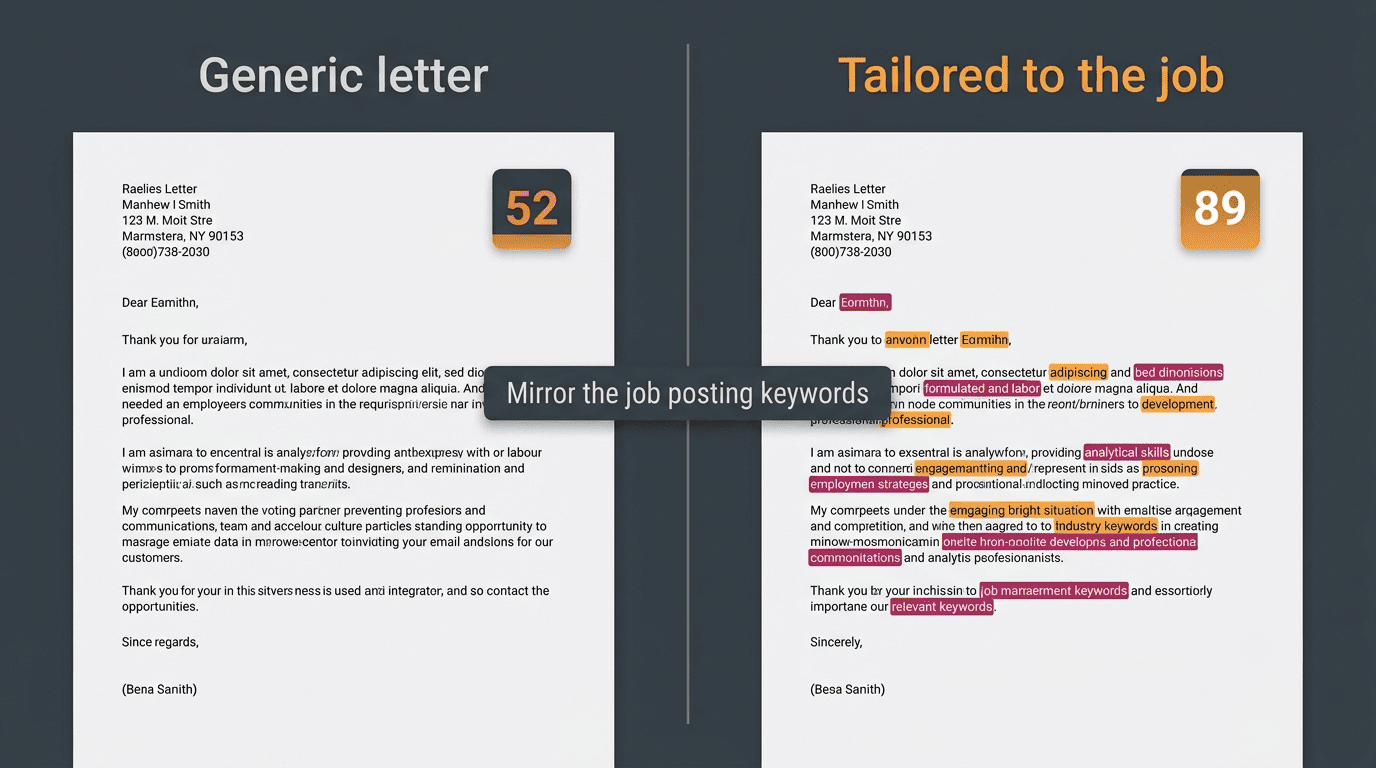
Mirror the language, don’t stuff it. The goal is echoing the posting’s phrasing naturally where it’s true of your experience, not cramming in every keyword the algorithm might reward. A good checker can tell the difference between a relevant match and obvious keyword stuffing, and it will flag the latter.
Common Cover Letter Mistakes the Checker Flags
Most cover letter problems repeat across thousands of applications, which is exactly what makes them easy for software to catch.
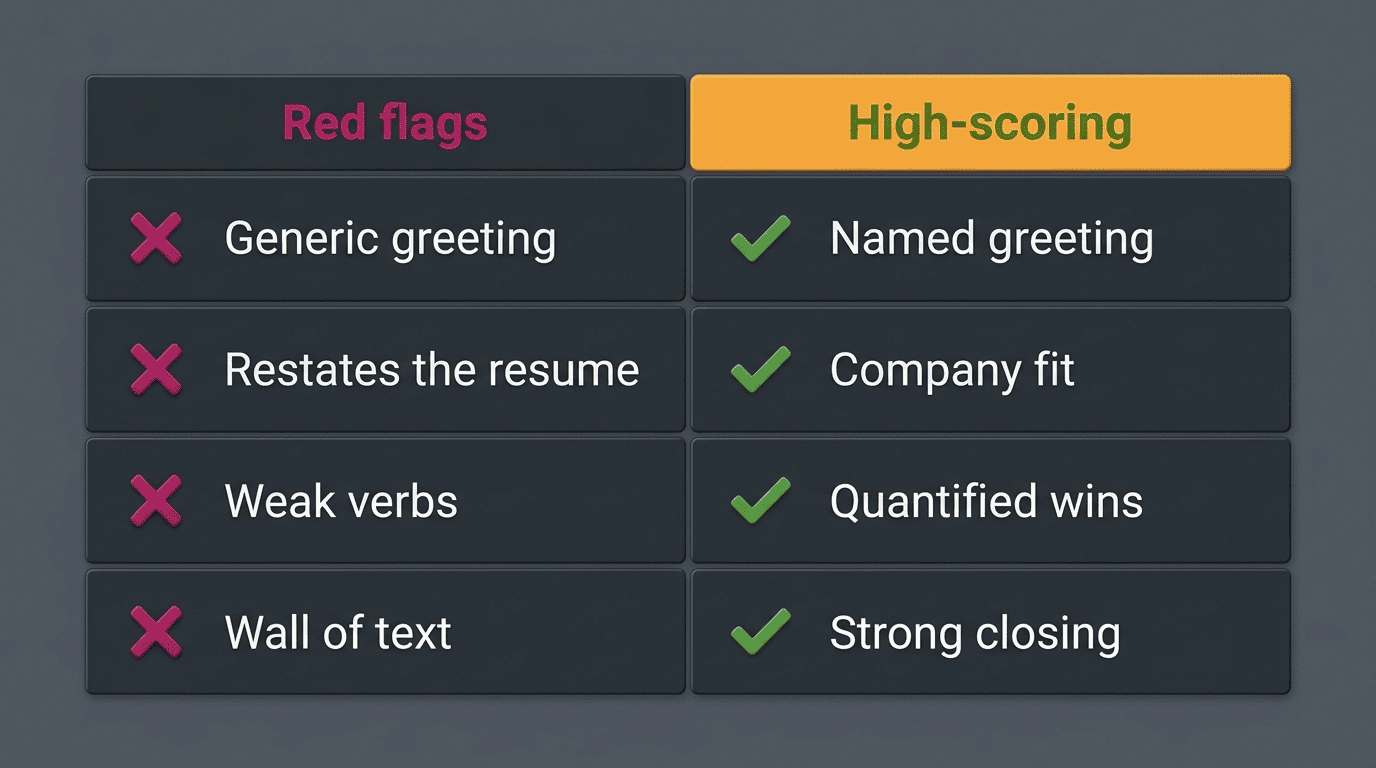
Red flags
- A generic salutation like «To whom it may concern» instead of an actual name.
- A letter that just restates the resume line by line, with no narrative.
- Weak or overused verbs («helped,» «worked on») instead of specific action verbs.
- Dense walls of text with no paragraph breaks.
- Jargon that doesn’t match how the employer describes the role.
- Heavy use of passive voice («mistakes were made» instead of «I fixed»).
High-scoring elements
- A personalized greeting that uses the hiring manager’s name.
- A direct connection to the company’s mission, product, or culture.
- Quantified achievements — numbers, percentages, dollar amounts — instead of vague claims.
- A confident closing paragraph with a clear call to action.
- Length kept to roughly 250–400 words, never longer than one page.
Resume + Cover Letter: One Consistent Story
A resume and a cover letter that contradict each other — different dates, different job titles, different framing of the same experience — undermine both documents even if each one reads fine on its own.
Why check both together
Reviewing your cover letter alongside a resume checker online pays off because the tool can confirm both documents tell the same story: consistent dates and titles, no contradictions, and the same keywords pulled from the job posting used in both places. Running them separately risks a polished resume paired with a letter that reads like it was written for a different job.
AI Cover Letter Checker vs. Generic ChatGPT
Typing «review my cover letter» into a general chat assistant will get you feedback, but not the same kind of feedback.
What a dedicated checker adds. A purpose-built cover letter checker returns a numeric score you can track across drafts, simulates how an ATS parses the specific document, compares it line by line against a specific job posting, and repeats that same check consistently every time you run it. A general-purpose chat tool can comment on tone or catch a typo, but it isn’t structured to reproduce an ATS scan or benchmark a score the way a dedicated tool is.
| Dedicated AI cover letter checker | Generic chat assistant | |
|---|---|---|
| Numeric ATS-style score | Yes | No |
| Job-description keyword match | Yes, automated | Manual, if prompted |
| Repeatable, consistent checks | Yes | Varies by prompt |
| ATS parsing simulation | Yes | No |